Make the useful thing the easier thing.
Design your environment around the behaviour you want. A practical friction audit for your desk, your phone and the everyday routines you keep postponing.
THE SHORT VERSION · BOOK 01
100 Ideas for a Better Life, Two Pages Each
The useful ideas from personal development, checked against the research and distilled into 100 practical two-page chapters.
Paperback & Kindle · By Alexander Crespo
You do not need another book to finish. You need an idea you can use. Open this one where life feels stuck: your habits, your attention, your relationships, your work. Read the gist, then try an exercise.
Each subject stands alone. Get the gist in a few minutes, without a long story to get through first.
When a popular idea is overstated, the book says so. References are organised by subject so you can follow the evidence.
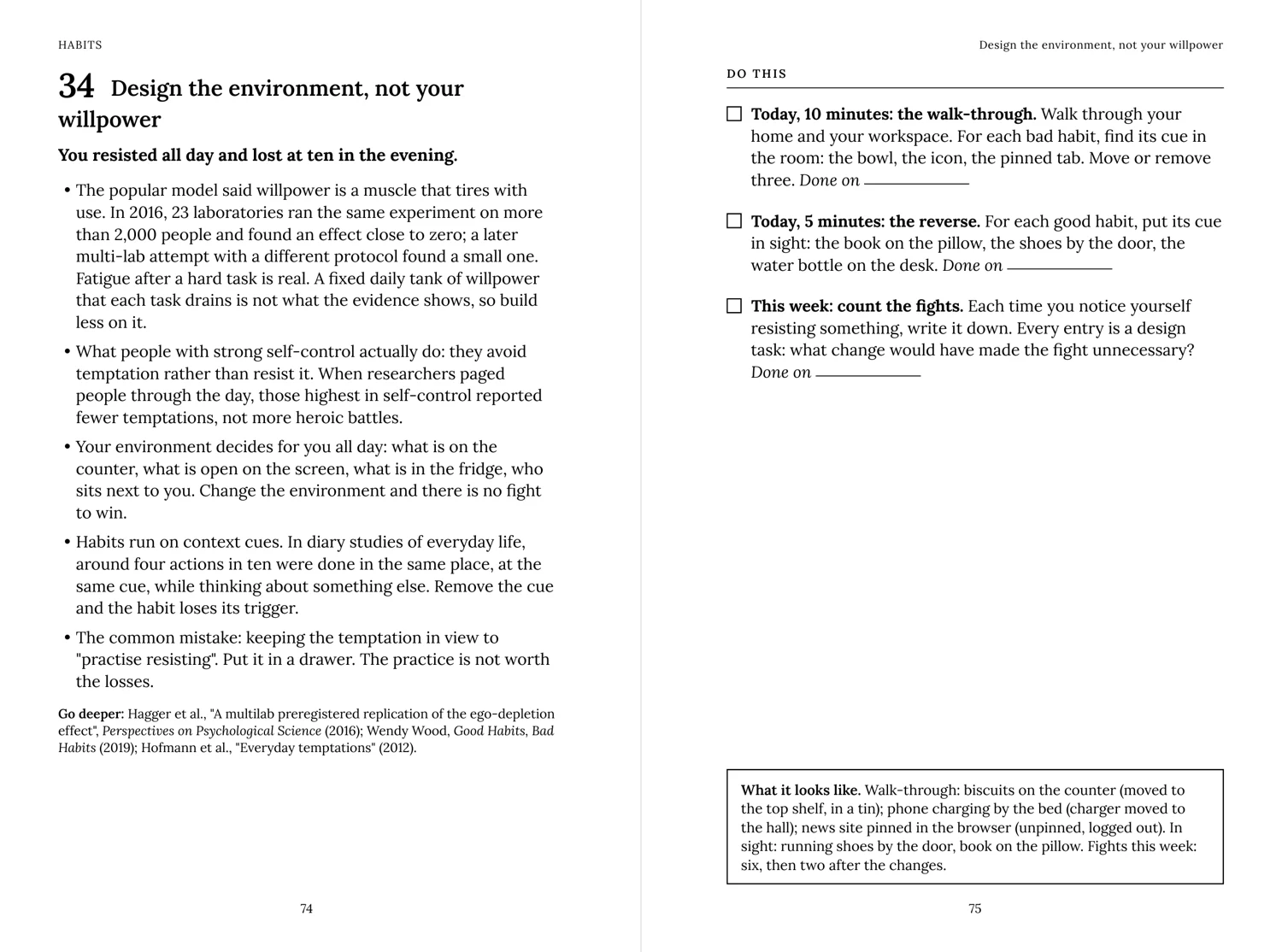
Exercises, checkboxes and a worked example turn reading into a small experiment in your own life.
Here is an actual spread from the book. An idea on the left, exercises on the right.
Use the start-here map to find the subject that speaks to today. Follow the references when you want to go deeper.
No. Each subject is a self-contained two-page chapter. Use the start-here map, pick a section, or open the book at a subject you need.
Each spread has short practical exercises, including something you can try today and an experiment to run over a week. A worked example shows what a first attempt could look like.
References are organised by subject. The books distinguish the underlying research from the practical exercises built around it. An exercise is an experiment to try, not a guaranteed result. Read our approach to evidence.
The series is designed for paperback and Kindle. Check Amazon for this title and current availability.
Articles expanding selected subjects from this book.
Design your environment around the behaviour you want. A practical friction audit for your desk, your phone and the everyday routines you keep postponing.
Habit formation has no universal deadline. Understand the research behind the 66-day figure and build a routine that survives an imperfect week.
Learn to write an if-then plan with a recognisable cue and a specific action. Includes examples, a small experiment and the limits of the evidence.